You’ve probably heard that olive oil is healthy, delicious, and can add a Mediterranean touch to your cooking. See last week's post on Hooser Health "More than a Peace Offering" for the benefits of extra virgin olive oil, how to use it, and remedies. But did you know that not all olive oil is created equal? There’s a big difference between pure, high-quality olive oil and the fake stuff that’s been flooding the market. In fact, it is believed that 80% of olive oils on the market are fake! So, how can you tell the difference, and how can you make sure you’re getting the real thing? Here’s everything you need to know about spotting (and avoiding) fake olive oil.
First things first: what is fake olive oil, and why is it a problem? Fake olive oil is any product that’s labeled as “olive oil” but actually contains a mix of lower-quality oils (like canola, soybean, or sunflower), or has been adulterated with chemicals or additives to change its flavor, color, or texture. This is a problem for a few reasons: not only does fake olive oil taste worse, but it also lacks the health benefits of real olive oil. Genuine olive oil is high in heart-healthy monounsaturated fats, antioxidants, and anti-inflammatory compounds, which can reduce your risk of chronic disease and promote good health.
How can you spot fake olive oil? Here are a few tips:
1. Look for the right label:
- Pure olive oil should be labeled as “extra-virgin” or “virgin”. The words "cold pressed" or "first cold pressed" means that they press the olives to get the oil instead of using heat and chemicals to extract the oil. The words "single state", "single destination, or "single origin" also is an indicator of authenticity as fake olive oil will source olives from multiple countries.
- The label should never have the words “light”, “pure”, or “refined” oils. These terms are often used to disguise lower-quality blends, so be wary of anything that’s not labeled clearly.
- On the label, pure olive oil has a harvest date usually located above the barcode. Fakes only include the bottling date and best-by date.
- Look for an authenticity seal. These seals are round and vary per country.
•The European Union's seal is yellow and red and will say: "Protected Designation Of Origin"
• If it's from Italy the seal is yellow and red and will read: "Denominazione D'orgine Protetta"
• The seal from California is yellow and green and reads: "California Olive Oil Council Certified Extra Virgin"
• There is also a North American Olive Oil Association-certified quality seal that is red and white.
• The seal from Australia is green and white and is in a teardrop shape that will say: "AOOA Australian Olive Oil Association"
2. It's all in the bottle:
- Pure extra virgin olive oil is sold in glass bottles (except one, looking at you Costco.)
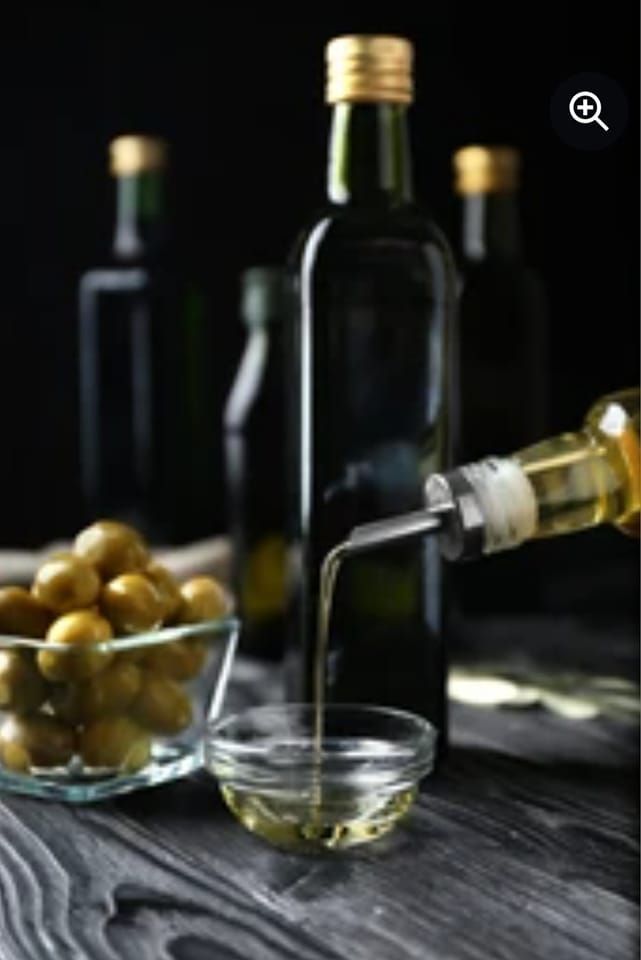
- Pure olive oil comes in dark bottles only. Never will it be sold in a clear bottle as sunlight, heat, and oxygen are olive oil's enemies—they break down the oil and cause it to go rancid more quickly.
3. Check the color:
- High-quality olive oil should be a vibrant green color, with a slight peppery, grassy-like taste, and aroma. - If your olive oil is pale yellow or has a mild, bland taste, it may be a sign that it’s been refined or mixed with other oils.
- An easy way to tell if you have pure olive oil is when you drink it or eat it, you should feel a slight tickle or irritation in the back of your throat. That is caused by a polyphenol called Oleocanthal which is a super anti-inflammatory compound.
4. Read the price tag:
- Quality olive oil isn’t cheap: expect to pay at least $14-$60 for a standard bottle of pure, extra-virgin olive oil. If the price seems too good to be true, it probably is: cheap olive oil is often fake or adulterated.
5. The fridge test:
- Put your olive oil in the fridge for at least an hour or you can pour a small amount over ice. If it hardens like butter then you may have real olive oil. *However note that this test may be faulty as fake olive oils contain over 50% peanut and canola oil which both have monounsaturated fats that also will freeze when exposed to colder temperatures.
Now that you’ve got the lowdown on all things olive oil, you’re ready to make smarter, healthier choices. Remember: when in doubt, choose quality over quantity, and don’t be fooled by fake imitators. Your taste buds (and your body) will thank you!
-Happy Healing from
Hooser Health